01
My First Encounter with Death
I was six years old when I first encountered death.
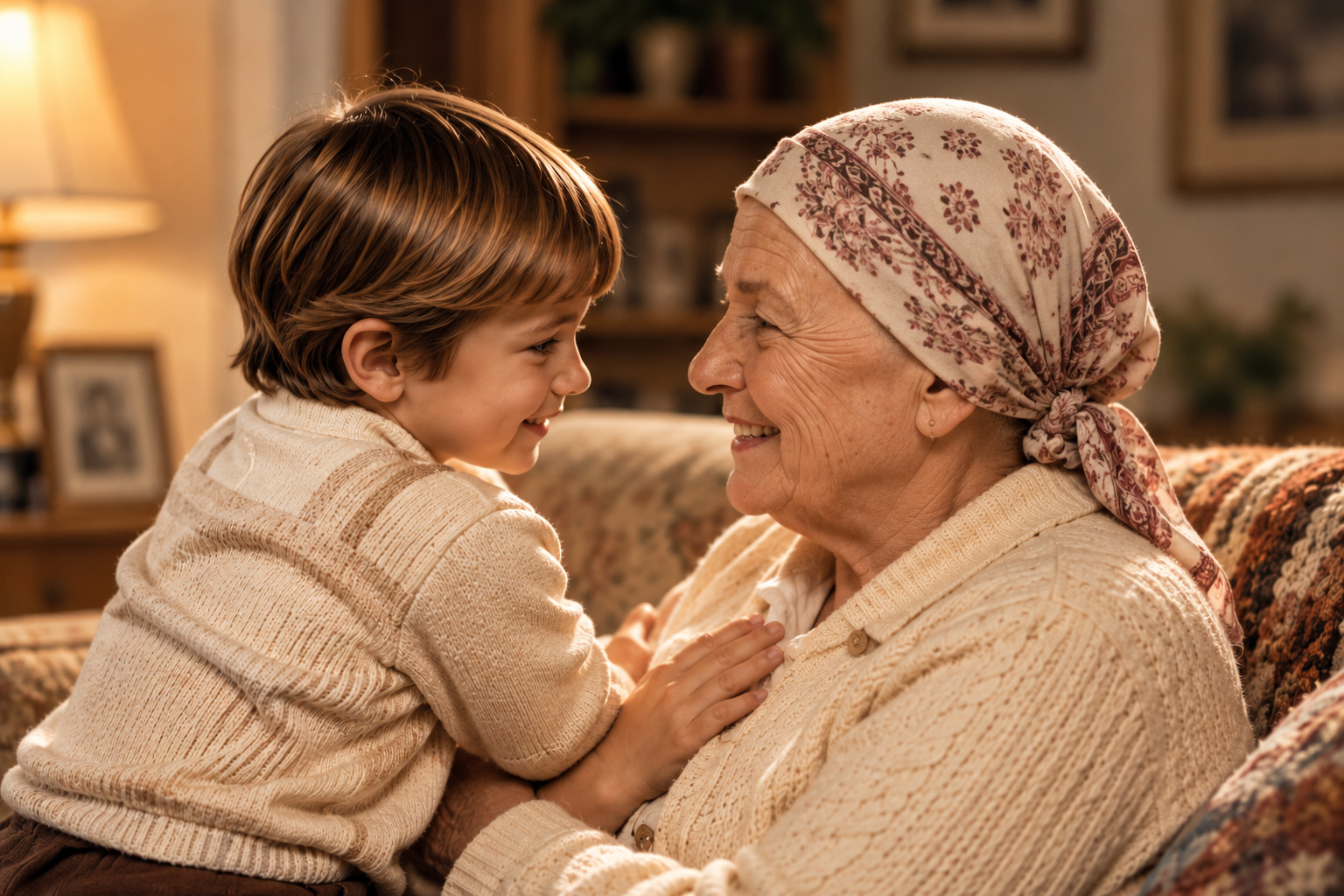
My grandmother was living with our family when she was diagnosed with brain cancer. I watched her fight that terrible disease, and I was there as our family accompanied her through the final chapter of her life.
At six years old, I didn't really understand what was happening.
I didn't have the words to describe what I was seeing or the emotional maturity to process it. But I was watching. And listening. And taking it all in.
I watched my parents and grandfather care for her. I saw the exhaustion, the uncertainty, and the stress that caregiving placed on our family.
But I also witnessed something else.
I saw extraordinary love.
I watched my family surround my grandmother with compassion and tenderness, caring for her until her final breath.
And when she died, I watched how our family grieved. I experienced the rituals that surrounded her passing. I began asking questions that had never occurred to me before.
What happens when we die? Where do we go? What does it mean when someone we love is suddenly no longer here?
For a six-year-old boy, these were enormous questions.
I didn't have answers. But the experience left an indelible imprint on me.
It was my first understanding that life eventually ends.
And looking back, I believe it was also the beginning of something I wouldn't fully understand for many years.
02
The Lessons Life Continued to Teach Me

As the years passed, death became a more familiar part of my life.
Like so many of us, I experienced the passing of family members, close friends, and people I deeply loved.
Each experience was different. Each brought its own sadness, questions, and challenges.
But over time, I began to recognize something about myself.
I was comfortable being present with people who were dying.
Not because I had all the answers. I certainly didn't.
But because I wasn't afraid to sit with them in their uncertainty, listen to their fears, or simply be there when words weren't necessary.
I also found myself supporting the people around them—the spouses, children, friends, and caregivers who were trying to make sense of what was happening while carrying their own emotions.
Sometimes that meant helping someone work through a difficult decision. Sometimes it meant listening. Sometimes it meant offering comfort.
And sometimes it meant simply showing up.
I never thought of any of this as a profession.
It was just something I felt drawn to do.
03
The Friend Who Helped Me Find My Calling
Then came Sam.
Sam was one of my closest friends, and for 26 months I accompanied him through his battle with pancreatic cancer.
Those months brought all the things that serious illness can bring—uncertainty, difficult conversations, hope, fear, sadness, and moments of extraordinary connection.
I walked alongside Sam through that journey, doing what I could to support him and those who loved him.
After Sam passed away, a member of his family reached out to me.
They had watched how I had accompanied Sam throughout those 26 months. They told me they believed I had a gift for helping people navigate the end of life.
And then they suggested something I had never seriously considered.
They thought I should become an end-of-life doula.
I remember that conversation because something about it felt different.
It wasn't simply someone suggesting a new career.
It felt as though Sam was whispering in my ear.
As though, even after his passing, my friend was still guiding me toward something meaningful.
And for the first time, I began to see how so many experiences throughout my life might have been leading me to this very moment.
The little boy who watched his grandmother die.
The adult who had accompanied friends and loved ones through illness and loss.
The person who had so often found himself sitting beside others during some of their most difficult moments.
Perhaps these weren't simply separate experiences.
Perhaps they were all part of a journey.
04
Finding My Way to This Work
That conversation opened a door.
I began volunteering with hospice, participating in bereavement support groups and becoming more involved in supporting people approaching the end of life and those grieving a loss.
I continued learning, listening, and discovering how much there was to understand about the emotional, practical, and spiritual dimensions of dying.

Eventually, I pursued formal end-of-life doula training through the International End of Life Doula Association (INELDA).
The training gave me tools, structure, and a deeper understanding of how to accompany individuals and families through the end-of-life journey.
But it also reinforced something I had been learning since I was six years old.
Sometimes the greatest gift we can offer another human being is simply our presence.
Not trying to fix everything.
Not pretending to have all the answers.
Not telling someone how they should feel.
But listening. Helping them find their own way. And making sure they don't have to navigate the experience alone.
05
Finding Beauty in the Most Difficult Moments

Over the years, my understanding of death has changed.
I know how painful it can be.
I have witnessed the heartbreak of losing someone we love, the exhaustion of caregiving, and the grief that can follow us long after someone has taken their final breath.
I would never minimize that pain.
But I have also witnessed something that is harder to explain.
I have seen extraordinary beauty emerge from the experience of death.
I have watched families reconnect.
I have seen difficult conversations become moments of forgiveness.
I have witnessed expressions of love that might otherwise have remained unspoken.
And I have seen people discover strength, compassion, and a deeper understanding of life through the experience of losing someone they love.
There is a kind of magic in those moments.
Not because death itself is beautiful or because grief is easy.
But because even in the presence of profound sadness, something meaningful can emerge.
I have come to believe that death is not always simply an ending.
For those who remain, it can also mark the beginning of another chapter.
A chapter shaped by remembrance, love, grief, growth, and sometimes an entirely new understanding of what matters most.
I've seen this happen.
And it has changed how I look at both life and death.
06
Why I Created Life Remaining
Today, I consider it one of the greatest honors of my life to be invited into someone's end-of-life journey.
There is something deeply sacred about being welcomed into those final chapters.
To sit beside someone who is facing their own mortality.
To help a family navigate difficult conversations and decisions.
To support a caregiver who is exhausted, overwhelmed, or simply unsure what to do next.
To be present with loved ones as they experience grief, love, and the changes that come with saying goodbye.
These are profoundly human moments.
And I believe no one should have to face them feeling alone.
That is why I created Life Remaining.
To help individuals and families prepare for what lies ahead, navigate the uncertainty and decisions that arise, and feel accompanied throughout the journey.
Not to take control of their experience.
But to help them discover what matters most to them and find their own way forward.
We will all encounter death. We will all be touched by loss.
But I believe that even in life's most difficult chapters, there can be moments of extraordinary connection, meaning, and love.
And if I can help someone discover even a small part of that, then I know I am doing the work I was meant to do.
When I look back on the journey that brought me here, I think about my grandmother.
I think about the six-year-old boy who watched his family care for her with such love.
And most of all, I think about my friend Sam.
The friend who, even in his passing, helped me discover a new purpose in my own life.
Sam, thank you for guiding me here.
This is my calling.